

The latest news on global issues
Provided by AGP
The Rise of Bio-Based and Recycled Polymer Blends: An Emerging Frontier in the Plastic Compounding Market, FMI
Plastic Compounding Market
The Plastic Compounding Market is shifting toward sustainable blends using bio-based and recycled polymers, driven by innovation and environmental regulations.
The rise of bio-based and recycled polymer blends in plastic compounding marks a critical shift. Innovations in compatibilizers and processing boost sustainability while maintaining performance.”
NEWARK, DE, UNITED STATES, May 19, 2025 /EINPresswire.com/ -- The Plastic Compounding Market has traditionally been dominated by the blending of virgin polymers with various additives to enhance physical, chemical, and mechanical properties. Plastic compounding is a critical manufacturing step that transforms raw polymers into materials tailored for specific applications, ranging from automotive parts to consumer electronics. However, while conventional market reports focus heavily on volumes of polyethylene, polypropylene, and other petrochemical-derived polymers, a less frequently discussed yet increasingly significant area is the integration of bio-based and recycled polymer blends within plastic compounding. This emerging niche, often overlooked in mainstream analysis, is rapidly reshaping the industry landscape in response to environmental concerns and regulatory pressures.— Nikhil Kaitwade, Associate Vice President at Future Market Insights
𝐌𝐚𝐤𝐞 𝐈𝐧𝐟𝐨𝐫𝐦𝐞𝐝 𝐃𝐞𝐜𝐢𝐬𝐢𝐨𝐧𝐬 – 𝐀𝐜𝐜𝐞𝐬𝐬 𝐘𝐨𝐮𝐫 𝐒𝐚𝐦𝐩𝐥𝐞 𝐑𝐞𝐩𝐨𝐫𝐭 𝐈𝐧𝐬𝐭𝐚𝐧𝐭𝐥𝐲! https://www.futuremarketinsights.com/reports/sample/rep-gb-15461
𝐔𝐧𝐝𝐞𝐫𝐬𝐭𝐚𝐧𝐝𝐢𝐧𝐠 𝐏𝐥𝐚𝐬𝐭𝐢𝐜 𝐂𝐨𝐦𝐩𝐨𝐮𝐧𝐝𝐢𝐧𝐠 𝐚𝐧𝐝 𝐈𝐭𝐬 𝐓𝐫𝐚𝐝𝐢𝐭𝐢𝐨𝐧𝐚𝐥 𝐒𝐜𝐨𝐩𝐞
At its core, plastic compounding involves the melting and mixing of polymers with additives such as fillers, plasticizers, stabilizers, and colorants to produce a compound with desired properties for downstream processing. Traditionally, this process has relied largely on virgin synthetic polymers obtained from fossil fuels, which offer consistent quality and predictable performance. The compounded plastics are widely used across industries, notably in packaging, automotive, construction, and electrical components. Despite its economic importance, this conventional approach has raised sustainability concerns, primarily because of the dependence on non-renewable resources and challenges related to plastic waste management.
𝐓𝐡𝐞 𝐒𝐡𝐢𝐟𝐭 𝐓𝐨𝐰𝐚𝐫𝐝𝐬 𝐒𝐮𝐬𝐭𝐚𝐢𝐧𝐚𝐛𝐥𝐞 𝐏𝐨𝐥𝐲𝐦𝐞𝐫 𝐁𝐥𝐞𝐧𝐝𝐬
Driven by tightening environmental regulations, corporate sustainability goals, and changing consumer preferences, the plastic compounding sector is witnessing a pivotal shift towards incorporating bio-based polymers and recycled plastics. This shift represents a convergence of the circular economy concept with polymer technology. Sustainable plastic compounding leverages bio-polymers derived from renewable resources such as polylactic acid (PLA), polyhydroxyalkanoates (PHA), and cellulose-based polymers, alongside recycled polymers sourced from post-consumer and post-industrial plastic waste.
This trend is increasingly visible in market research queries and reports under alternate search terms like “sustainable plastic compounding,” “polymer compounding innovations,” and “bio-polymer blends market.” The compounding of bio-based and recycled polymers aims not only to reduce the carbon footprint of plastics but also to enhance material lifecycle management by enabling multiple reuse cycles. For instance, the European Union’s stringent regulations on single-use plastics and mandates on recycled content in packaging have spurred compounders to innovate in this space.
𝐓𝐞𝐜𝐡𝐧𝐨𝐥𝐨𝐠𝐢𝐜𝐚𝐥 𝐈𝐧𝐧𝐨𝐯𝐚𝐭𝐢𝐨𝐧𝐬 𝐄𝐧𝐚𝐛𝐥𝐢𝐧𝐠 𝐁𝐢𝐨- 𝐚𝐧𝐝 𝐑𝐞𝐜𝐲𝐜𝐥𝐞𝐝 𝐏𝐨𝐥𝐲𝐦𝐞𝐫 𝐂𝐨𝐦𝐩𝐨𝐮𝐧𝐝𝐬
Compounding bio-based and recycled polymers is technologically challenging due to the inherent differences in chemical structure, molecular weight, and thermal stability compared to virgin polymers. Compatibility issues often arise, leading to compromised mechanical properties and processing difficulties. To address these challenges, significant advancements have been made in compounding machinery, chemical compatibilizers, and process optimization techniques.
𝐔𝐧𝐥𝐨𝐜𝐤 𝐂𝐨𝐦𝐩𝐫𝐞𝐡𝐞𝐧𝐬𝐢𝐯𝐞 𝐌𝐚𝐫𝐤𝐞𝐭 𝐈𝐧𝐬𝐢𝐠𝐡𝐭𝐬 – 𝐄𝐱𝐩𝐥𝐨𝐫𝐞 𝐭𝐡𝐞 𝐅𝐮𝐥𝐥 𝐑𝐞𝐩𝐨𝐫𝐭 𝐍𝐨𝐰: https://www.futuremarketinsights.com/reports/plastic-compounding-market
Modern twin-screw extruders, for example, provide enhanced mixing capabilities that allow precise control over residence time and temperature profiles, facilitating the uniform dispersion of diverse polymer blends. Compatibilizers, specialized additives designed to improve interfacial adhesion between dissimilar polymers, have been a game-changer in this domain. By chemically bonding or physically linking polymer chains, compatibilizers enable the creation of stable, high-performance compounded materials that maintain strength, flexibility, and durability.
Innovations in reactive extrusion processes have also gained traction, where chemical reactions are induced during compounding to modify polymer structures in situ. This approach has proven effective in upgrading recycled plastics, allowing compounders to produce blends that meet stringent application requirements, particularly in automotive and packaging sectors.
𝐌𝐚𝐫𝐤𝐞𝐭 𝐄𝐱𝐚𝐦𝐩𝐥𝐞𝐬 𝐚𝐧𝐝 𝐂𝐚𝐬𝐞 𝐒𝐭𝐮𝐝𝐢𝐞𝐬
Several companies and projects exemplify the potential of bio-based and recycled polymer blends within the plastic compounding market. BASF, one of the global chemical giants, has introduced a portfolio of compounds that integrate bio-based content and recycled polymers under its “ecovio” and “polymerblend” product lines. These compounds are tailored for applications in packaging and agricultural films, demonstrating comparable performance to conventional plastics while offering environmental benefits.
Another compelling example comes from Europe, where the RecyClass initiative, an industry-led platform for recycled plastics, has partnered with compounding companies to develop certified recycled polymer blends. These collaborations aim to scale up the use of recycled content without compromising product quality, thereby supporting the EU’s circular economy targets.
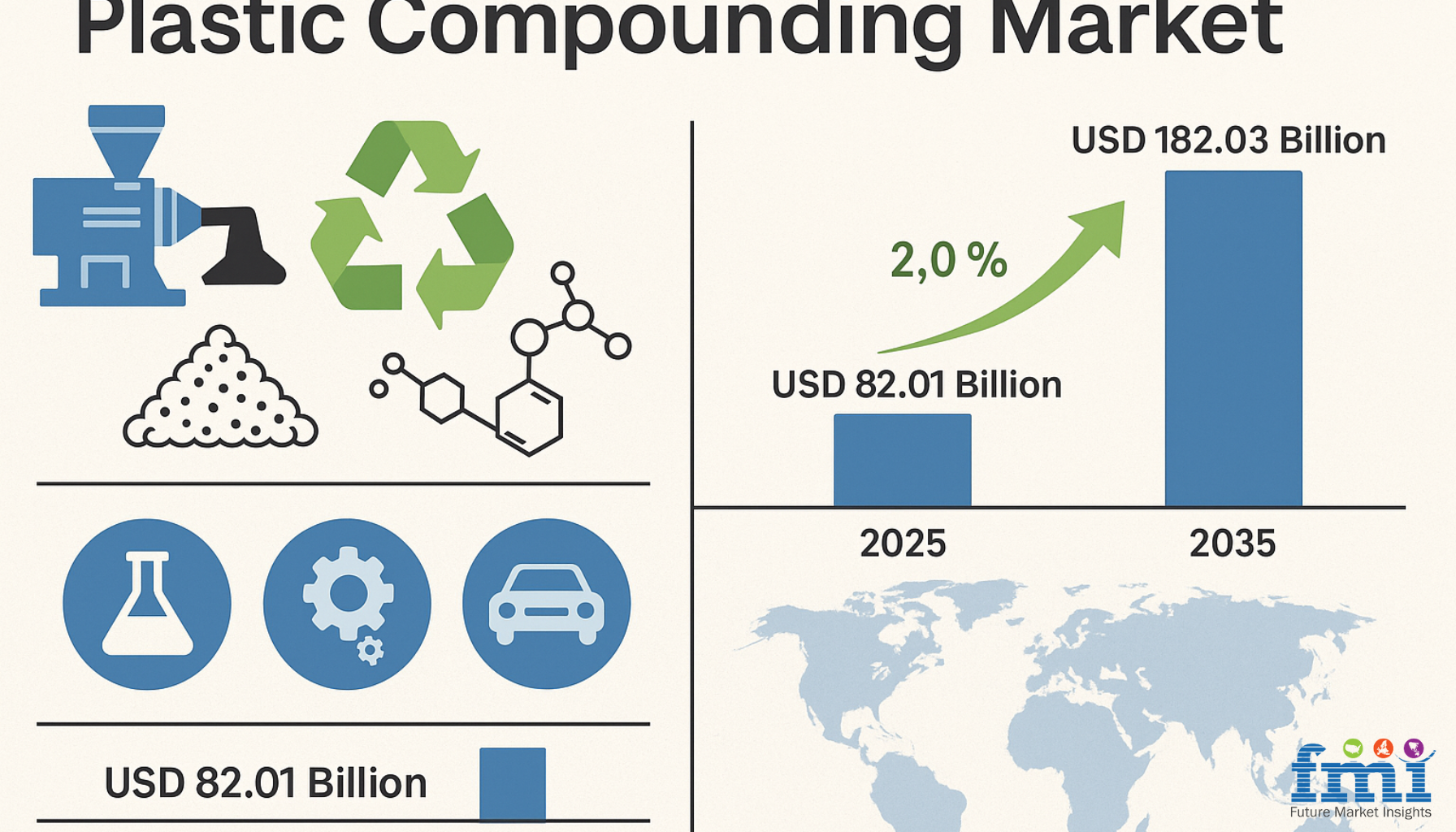
Market data underscores the growing significance of this niche. According to a recent report by Future Market Insights, the global Plastic Compounding market is estimated to account for USD 82.01 billion in 2025. It is anticipated to grow at a CAGR of 2.0% during the assessment period and reach a value of USD 182.03 billion by 2035. Similarly, the recycled polymer compounding market has gained momentum, driven by increasing legislative mandates on recycled content and corporate commitments to plastic waste reduction.
𝐏𝐨𝐥𝐲𝐦𝐞𝐫𝐬 & 𝐏𝐥𝐚𝐬𝐭𝐢𝐜𝐬 𝐈𝐧𝐝𝐮𝐬𝐭𝐫𝐲 𝐀𝐧𝐚𝐥𝐲𝐬𝐢𝐬: https://www.futuremarketinsights.com/industry-analysis/polymers-and-plastics
𝐂𝐡𝐚𝐥𝐥𝐞𝐧𝐠𝐞𝐬 𝐚𝐧𝐝 𝐅𝐮𝐭𝐮𝐫𝐞 𝐎𝐮𝐭𝐥𝐨𝐨𝐤
Despite promising advances, challenges remain in mainstreaming bio-based and recycled polymer blends. Economic factors such as higher feedstock costs for bio-polymers, supply chain limitations, and variability in recycled polymer quality can hinder widespread adoption. Moreover, technical hurdles linked to performance consistency and processing stability continue to require dedicated research and development efforts.
However, the future outlook for this specialized segment within the plastic compounding market is optimistic. Increasing investments in R&D, coupled with growing consumer demand for sustainable products, are likely to accelerate innovation. The integration of digital technologies and Industry 4.0 principles into compounding processes may further enhance quality control and process efficiency.
As sustainability imperatives tighten globally, the market for bio-based and recycled polymer compounds is poised not only to expand but also to redefine what plastic compounding means in a resource-constrained world. Companies that successfully navigate this transformation by balancing performance, cost, and environmental impact will lead the next wave of growth in the plastic compounding industry.
𝐓𝐨𝐩 𝐒𝐞𝐠𝐦𝐞𝐧𝐭𝐬 𝐒𝐭𝐮𝐝𝐢𝐞𝐝 𝐢𝐧 𝐭𝐡𝐞 𝐏𝐥𝐚𝐬𝐭𝐢𝐜 𝐂𝐨𝐦𝐩𝐨𝐮𝐧𝐝𝐢𝐧𝐠 𝐌𝐚𝐫𝐤𝐞𝐭
By Product:
With respect to product outlook, the segment is classified into polyethylene (PE), polypropylene (PP), thermoplastic vulcanizates (TPV), thermoplastic polyolefins (TPO), poly vinyl chloride (PVC), polystyrene (PS), polyethylene terephthalate (PET), polybutylene terephthalate (PBT), polyamide, polycarbonate, acrylonitrile butadiene styrene (ABS), and others.
By Application:
In terms of application outlook, the segment is divided into automotive, building & construction, electrical & electronics, packaging, consumer goods, industrial machinery, medical devices, optical media, and others.
By Region:
In terms of region, the industry is segmented into North America, Latin America, Europe, East Asia, South Asia, Oceania, and MEA.
𝐑𝐞𝐥𝐚𝐭𝐞𝐝 𝐑𝐞𝐩𝐨𝐫𝐭𝐬:
High Purity Calcium Market Share Analysis: https://www.futuremarketinsights.com/reports/high-purity-calcium-market-share-analysis
Fire Retardant Plastics Market Share Analysis: https://www.futuremarketinsights.com/reports/fire-retardant-plastic-market-share-analysis
Aerosol Actuators Market Share Analysis: https://www.futuremarketinsights.com/reports/aerosol-actuators-market-share-analysis
White Cement Market Share Analysis: https://www.futuremarketinsights.com/reports/white-cement-market-share-analysis
Cyclohexanone Market Share Analysis: https://www.futuremarketinsights.com/reports/cyclohexanone-market-share-analysis
𝐀𝐛𝐨𝐮𝐭 𝐅𝐮𝐭𝐮𝐫𝐞 𝐌𝐚𝐫𝐤𝐞𝐭 𝐈𝐧𝐬𝐢𝐠𝐡𝐭𝐬 (𝐅𝐌𝐈)
Future Market Insights, Inc. (ESOMAR certified, recipient of the Stevie Award, and a member of the Greater New York Chamber of Commerce) offers profound insights into the driving factors that are boosting demand in the market. FMI stands as the leading global provider of market intelligence, advisory services, consulting, and events for the Packaging, Food and Beverage, Consumer Technology, Healthcare, Industrial, and Chemicals markets. With a vast team of over 400 analysts worldwide, FMI provides global, regional, and local expertise on diverse domains and industry trends across more than 110 countries.
Join us as we commemorate 10 years of delivering trusted market insights. Reflecting on a decade of achievements, we continue to lead with integrity, innovation, and expertise.
𝐂𝐨𝐧𝐭𝐚𝐜𝐭 𝐔𝐬:
Future Market Insights Inc.
Christiana Corporate, 200 Continental Drive,
Suite 401, Newark, Delaware - 19713, USA
T: +1-347-918-3531
For Sales Enquiries: sales@futuremarketinsights.com
Website: https://www.futuremarketinsights.com
LinkedIn| Twitter| Blogs | YouTube
Ankush Nikam
Future Market Insights Global & Consulting Pvt. Ltd.
+ +91 90966 84197
email us here
Visit us on social media:
Other
Legal Disclaimer:
EIN Presswire provides this news content "as is" without warranty of any kind. We do not accept any responsibility or liability for the accuracy, content, images, videos, licenses, completeness, legality, or reliability of the information contained in this article. If you have any complaints or copyright issues related to this article, kindly contact the author above.
